
Monthly Update
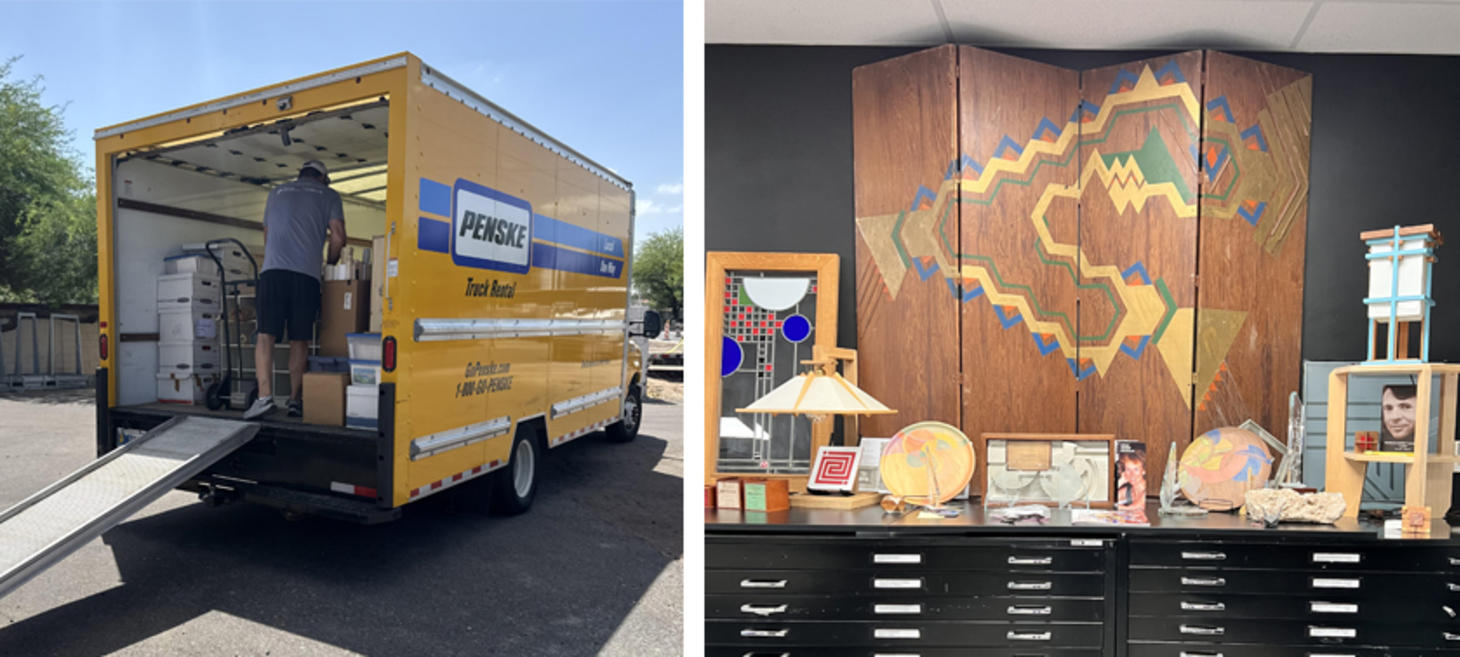
May Archival Material Migration
A major milestone has been reached in the continued growth of the Organic Architecture + Design Archives.
Earlier this month, OA+D successfully completed the migration of an important group of archival materials from long-term storage in Lexington, Kentucky to the OA+D processing center in Chandler, Arizona. The transfer included drawings, art glass windows, textiles, prints, books, ephemera, photographs, and other significant objects connected to the history of organic architecture and design.
The materials represent the work and legacy of architects and designers including Frank Lloyd Wright, Bruce Goff, William Wesley Peters, Eugene Masselink, and numerous Taliesin Fellows. After careful coordination and transportation, the collection safely arrived in Chandler and is now ready for processing, cataloging, preservation, and future research access.
This move marks another important step toward OA+D’s long-term goal of centralizing a massive body of organic architecture material in Chandler, creating what is becoming the largest single repository of archival material related to the organic architecture and design movement in the world.
Work of this scale is only possible through the continued support of our community. You can help advance preservation efforts like this by becoming part of the Friends of OA+D sustaining membership program. Sustaining members directly support collection preservation, processing, exhibitions, publications, and research access while helping ensure these important materials remain protected for future generations.
If you would like to support this work, become a sustaining member, or discuss donating archival materials to OA+D, we encourage you to contact us at info@oadarchives.org to learn more.
From The Archives
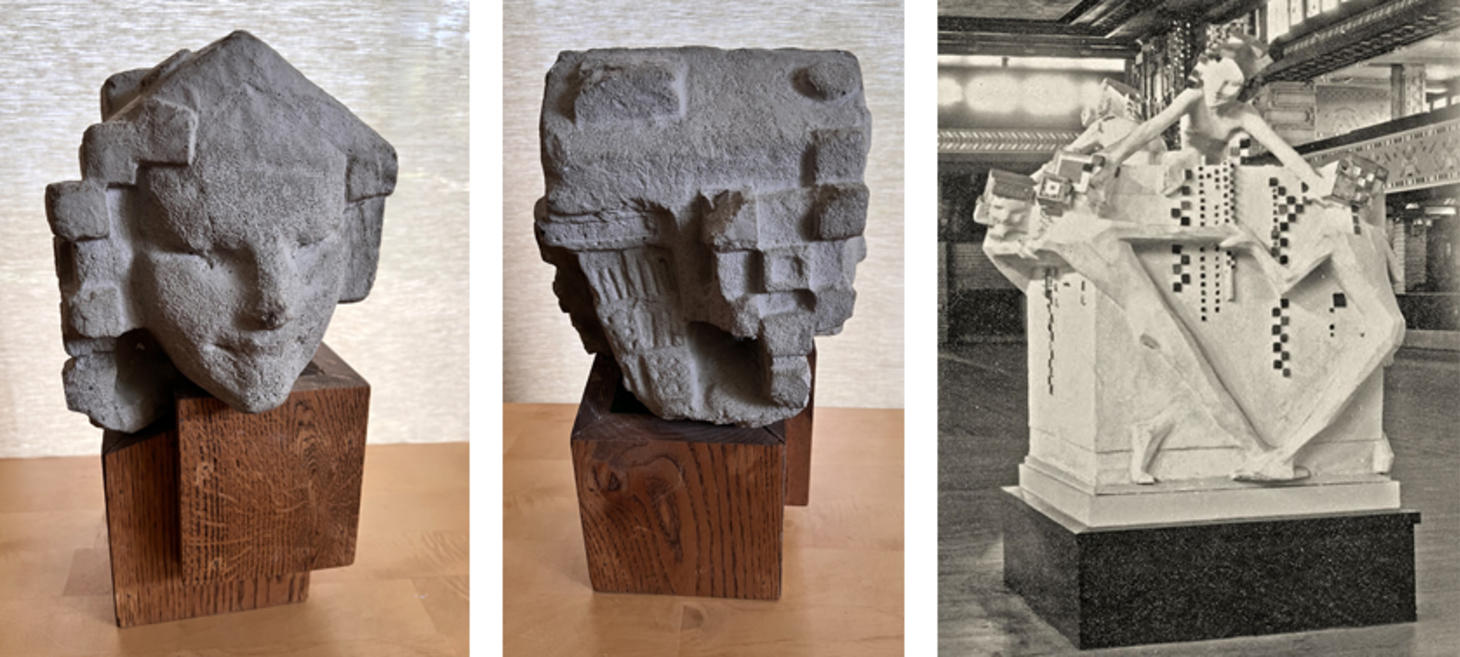
Among the newest additions to the collections of the Organic Architecture + Design Archives is a rare sculptural fragment connected to Frank Lloyd Wright’s famed Midway Gardens in Chicago. This example is one of the few known recasts produced by architect and preservationist Will Hasbrouck from the original surviving fragment discovered by Edgar Tafel. Exactly how many casts were ultimately made remains unknown.
According to Tafel, the original head was discovered partially buried in the ground while exploring the Midway Gardens site years after its demolition. Remarkably, the sculpture had lain face-up in the soil for decades, leaving the face heavily eroded by exposure while the sides and rear, protected underground, remained sharply detailed and intact. Tafel rescued the piece and later brought it to the Lewis House project in Libertyville, Illinois, where he created a distinctive wood display base formed from two askew cubes.
Years later, Hasbrouck borrowed the original sculpture to create molds, preserving the form and producing a small number of casts that helped keep the memory of this lost Midway Gardens artwork alive. The OA+D example retains the distinctive Tafel-inspired wood base and serves as a tangible reminder of one of Wright’s most celebrated and tragic works.
If you have archival materials related to Midway Gardens, Frank Lloyd Wright, or any other organic architectural or design items that you're interested in donating for our growing collections, please let us know by contacting us at info@oadarchives.org.
Support the Archives. Share the story. Become a Friend of OA+D.
OA+D NEWS & EVENTS
Save The Date For An Ocatilla Evening
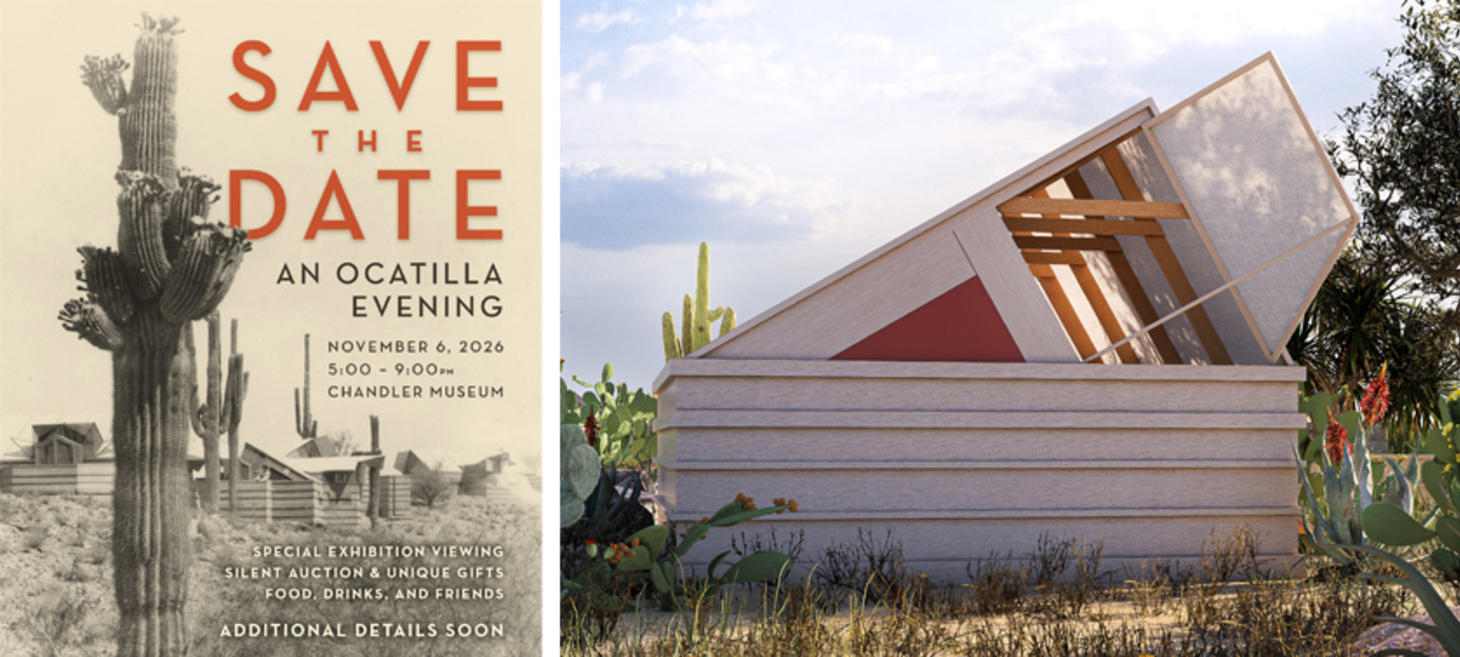
Please save the date for Friday, November 6, 2026, when the Organic Architecture + Design Archives will host An Ocatilla Evening at the Chandler Museum. This special fundraising event will feature an exclusive viewing of the upcoming exhibition Ocatilla: Frank Lloyd Wright’s Lost Desert Masterpiece, along with a silent auction, unique gifts, food, drinks, and an opportunity to support the preservation and sharing of architectural history. More details will follow in the coming months, but it will be an evening you will not want to miss!
Opening October 27, 2026 at the Chandler Museum, Ocatilla: Frank Lloyd Wright’s Lost Desert Masterpiece will reintroduce audiences to Wright’s remarkable 1929 desert camp, an experimental encampment that transformed his understanding of architecture, climate, and desert living. Though Ocatilla existed for only a brief moment in time, its ideas profoundly shaped the future of Taliesin West and Wright’s broader vision for building in the American Southwest.
Through rare archival materials, drawings, historic photographs, objects, and film footage, the exhibition will explore this pivotal chapter in architectural history. At the center of the experience will be a full-scale reconstruction of an Ocatilla cabin, allowing visitors to step directly into Wright’s lost desert world.
Realizing an exhibition of this scale requires significant research, fabrication, construction, and public programming. OA+D is seeking sponsors and supporters to help bring this ambitious project to life and ensure that Ocatilla can once again be experienced by the public.
Partner | $10,000+ Fund the exhibition centerpiece including the full-scale cabin reconstruction. Receive primary recognition across the exhibition, catalog, and promotional materials.
Patron | $5,000 Underwrite the official exhibition catalog. Receive prominent recognition in the gallery and in print.
Supporter | $1,000 Help fund research, development, and execution of the exhibition. Receive recognition on the exhibition display and catalog.
Friend | $500 Support exhibition design and fabrication. Receive recognition on the exhibition display.
The exhibition will coincide with the 2026 Frank Lloyd Wright Building Conservancy conference, bringing architects, scholars, preservationists, and visitors from across the country to Chandler for this important cultural event.
Your support helps preserve and share a remarkable chapter of architectural history while making it accessible to a new generation.
Make a tax-deductible gift or become an exhibition sponsor today.
Questions? Contact info@oadarchives.org
3D Model by Steven Vinzani – VinzanimationS and 3D Visualizations by Razin Khan – Redon Studio